

Contamination in the recycling stream remains a persistent operational and economic challenge facing the waste industry. Improperly sorted materials can increase processing costs, reduce commodity value and can ultimately lead to entire loads being rejected costing time, money and impacting organizational reputation.
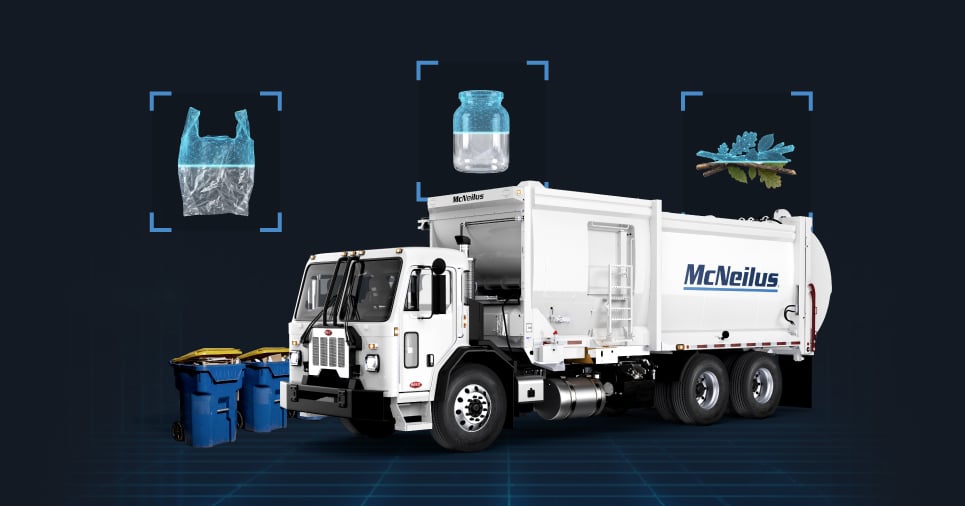
To address this challenge at its source, McNeilus has introduced AI-enabled material contamination detection technology; an integrated solution that brings real-time material intelligence directly to the point of collection without interruption to the operator. McNeilus has partnered with Lixo, a global leader in intelligent waste analysis to accelerate this technology in North America.
Let’s explore this technology and the impact it can have on fleets and communities of all sizes.
How It Works: Real-Time Material Identification at the Hopper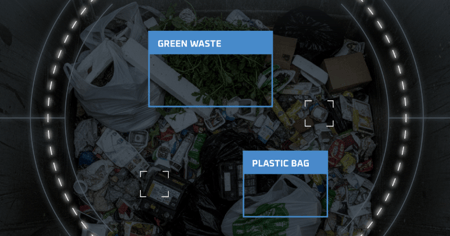
The McNeilus material contamination detection system utilizes a combination of:
- Advanced camera systems positioned to capture material flow
- Edge-based AI processing for immediate classification
- Machine learning models trained to identify recyclables and contaminants
- Cloud connectivity for data aggregation and analytics
As materials are tipped into the hopper, the system captures and analyzes visual data in real time. The onboard AI model classifies materials into predefined categories such as acceptable recyclables, organics, or contamination without interrupting collection operations. Fleet staff can assess the data via a proprietary dashboard to understand trends and key themes. Collectively, the system can detect 90 contaminants and advances over time as it collects more.
Enabling the Next Generation of Smart Collection
The integration of AI at the point of collection represents a fundamental shift in how waste streams are managed. Rather than relying solely on downstream processing, fleets can now capture and act on material data in real time.
“McNeilus’ material contamination detection technology, that’s leveraging expertise from Lixo, brings a solution that’ll revolutionize the refuse industry,” said Fenster, Connected Solutions Product Manager at McNeilus. “This intelligent solution detects 90 contaminants without requiring anything from the driver. This lets the driver focus on safely collecting materials while the system focuses on sustainability and compliance.”
With McNeilus material contamination detection technology, organizations are better equipped to:
- Promote operational efficiency
- Improve material recovery outcomes
- Manage costs associated with contamination
- Meet evolving environmental and regulatory expectations
Managing Operational Risk and Cost
Contamination in the refuse and recycling stream has direct financial implications, including:
- MRF rejection fees
- Downgraded commodity pricing
- Additional handling and transportation costs
By identifying material contamination at the point of collection, fleets of all sizes can take proactive measures to help manage these risks. Over time, this can support:
- High-quality recycling streams
- Reduced processing penalties
- Improved contract performance and compliance
This can help lead to a positive recycling operation, and overall positive reputation management.
Part of the McNeilus Connected Technology Ecosystem
Material contamination detection is one component of a broader McNeilus strategy to deliver connected, intelligent refuse and recycling collection solutions.
“At McNeilus and across Oshkosh Corporation, we continue to focus on developing solutions that promote safety and productivity for our customers,” said Fenster. “Our material contamination detection technology is a perfect example of a system that delivers actionable data to our customers to help them achieve their goals and requirements.”
When combined with technologies such as ClearSky™ Intelligence for fleet performance and diagnostics, fleets gain a comprehensive, data-driven approach to optimizing operations, safety and sustainability.
Supporting Data-Driven Sustainability
As regulatory requirements and sustainability targets continue to evolve, access to accurate, real-time data is becoming increasingly critical.
The McNeilus material contamination detection system enables:
- Quantifiable measurement of contamination rates
- Data-backed reporting for municipalities and stakeholders
- Targeted interventions to improve recycling participation
By shifting contamination management upstream, fleets can improve diversion rates while managing environmental impact.
Designed for Seamless Integration
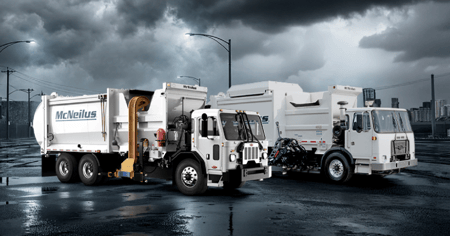 Partnering with Lixo, McNeilus designed this technology to integrate directly into refuse and recycling vehicle platforms without introducing operational complexity.
Key design considerations include:
- Non-intrusive hardware integration within existing vehicle architecture
- Automated data capture and processing, requiring no manual input from operators
- Scalable deployment across mixed fleets and route types
- Compatibility with McNeilus digital solutions, including telematics platforms
“In collaboration with Lixo, this solution is designed so that it could be retrofitted to different makes of refuse and recycling vehicles; including non-McNeilus vehicles,” said Fenster. “Whether a brand-new truck or a 10 year-old side loader from another manufacturer, McNeilus’ material contamination detection technology can be installed so all your vehicles are providing the same level of data.”
This allows fleets to adopt advanced material intelligence capabilities without disrupting existing workflows. This is not just an incremental improvement, it is a step toward a fully connected, intelligent refuse and recycling collection ecosystem. At McNeilus, we’re proud to be driving the refuse and recycling industry forward.
Ready to learn more? Explore our website, reach out to your local dealer or McNeilus sales leader today.