Advanced Manufacturing for Refuse and Recycling Collection Vehicles

Advanced manufacturing at McNeilus offers a purpose-built approach to refuse and recycling truck production, combining high-flow lines, connected tooling and digital build systems to deliver consistent, high-quality vehicles at scale. 

By integrating Industry 4.0 technologies, in addition to traceability and modern inspection processes throughout the build, McNeilus is able to meet customer demand while supporting the durability and reliability private companies, municipalities and fleet operators and haulers depend on. 

What it is:Advanced manufacturing for refuse and recycling trucks combines Industry 4.0 systems, connected tooling and digital quality checks to build vehicles with consistent results.

Why it matters: Consistency and throughput help truck owners and haulers get the right truck on route in a timely fashion.

How we help: McNeilus applies advanced manufacturing tools, including MES, high-flow lines and automated inspection to build durable, ready-to-work trucks at scale.

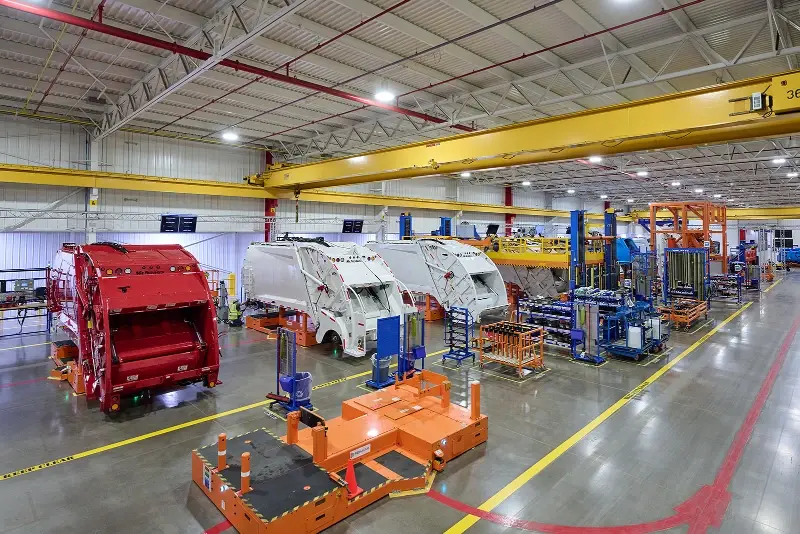
McNeilus refuse truck bodies on a high-flow assembly line inside a modern advanced manufacturing facility.

Why Advanced Manufacturing Matters in the Refuse and Recycling Industry

Refuse and recycling vehicle manufacturing today is shaped by a constant push to build trucks, maintain high build quality and accommodate a wide range of fleet specifications. 

Industry 4.0 manufacturing approaches are reshaping how refuse and recycling vehicles are built by linking manufacturing teams, equipment and data throughout the manufacturing process. These connected systems can help promote output, quality assurance and consistency, while still leaving room to integrate new technologies such as electrification and vehicle connectivity. 

McNeilus puts this approach into practice with high-flow production lines, digital manufacturing platforms and embedded quality controls to deliver trucks operators and haulers can trust from day one.

Key Pillars of McNeilus’ Advanced Manufacturing Innovation

McNeilus prioritizes continuous investment in our manufacturing processes. We achieve repeatable results at higher volumes by standardizing how work is performed across different manufacturing configurations. This manufacturing model is structured for growth and reinforced by detailed traceability and clearly defined quality checkpoints throughout the build process.

“Our goal with advanced manufacturing is simple: deliver trucks that are built right the first time. When customers put a McNeilus truck into service, they should feel confident it was built with consistency, care and accountability at every step.”
— Brian Brost, Senior Director of Operations, McNeilus

Benefits of Advanced Manufacturing for Refuse and Recycling Truck Owners and Haulers

Advanced manufacturing at McNeilus helps customers get trucks on route fast, built right and ready to work.

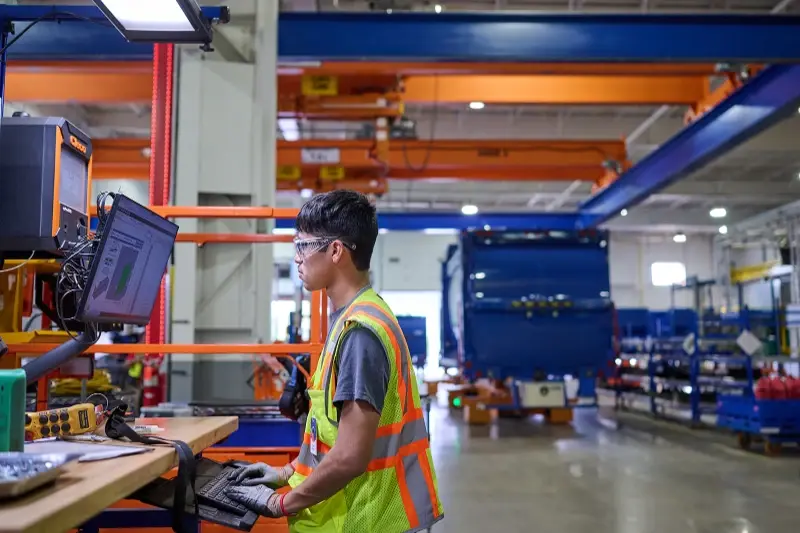
A technician uses a digital workstation on the McNeilus advanced manufacturing assembly line.

Traditional vs. Advanced Manufacturing in Refuse Truck Production

Feature / Process Area Traditional Manufacturing McNeilus Advanced Manufacturing
Production Method Manual or semi-automated assembly High-flow line production with automation
Build Consistency Varies by technician and workstation Digitally controlled steps with connected tools
Quality Assurance Manual inspections at limited stages MES tracking, torque monitoring, and continuous QA
Customization Can disrupt standard process Integrated digitally across stages with traceability
Throughput / Scale Limited by manual steps and rework Scalable with increased capacity and standardized flow
Inspection & Delivery Disconnected inspections (body vs. chassis) Joint pre-delivery inspection process
Data Availability Minimal visibility into build history End-to-end traceability through MES
Workforce Ergonomics & Safety Higher risk due to manual repetition Robotic assist, ergonomic solutions and few injuries
Technology Readiness (e.g., EV builds) Requires process redesigns Industry 4.0 foundation supports future upgrades

Advanced Manufacturing FAQs

+-

What’s the difference between traditional and advanced manufacturing in refuse and recycling truck production?

Traditional production methods typically rely on manual steps and offer limited visibility into each stage of the build. Advanced manufacturing links equipment, tools and quality checks across the production line, helping create clear oversight and consistent results from start to finish.

+-

How does McNeilus ensure quality in complex configurations?

At McNeilus, we use connected torque-monitoring tools, digital work instructions and a Manufacturing Execution System (MES) to track and trace each build stage. These systems support consistent execution and rigorous quality checks across configurations.

+-

What is a high flow line and why is it important?

A high-flow line organizes vehicle builds through a series of defined workstations performing specific tasks in a consistent sequence. This approach can aid in production capacity while maintaining high build quality and repeatable results across vehicle platforms.

+-

Does advanced manufacturing add to the customer's cost?

No. Advanced manufacturing focuses on improving how trucks are built, not increasing their cost. More efficient processes can help manage rework, support reliable delivery schedules and contribute to long-term vehicle uptime without adding additional expense for the customer.

+-

How does McNeilus balance customization and mass production?

McNeilus builds trucks using a disciplined, high-flow production model with clearly defined steps and documented quality checks throughout the build. Digital tracking provides visibility into each stage, enabling increased volume while maintaining control over custom specifications.
See How Advanced Manufacturing Can Help You

From short lead times to consistent build quality, McNeilus’ advanced manufacturing approach is designed to help you get trucks on route fast and keep them there.

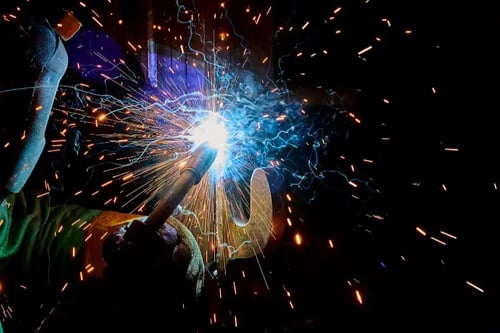
An industrial welder creates sparks while fabricating metal parts for refuse truck manufacturing.