
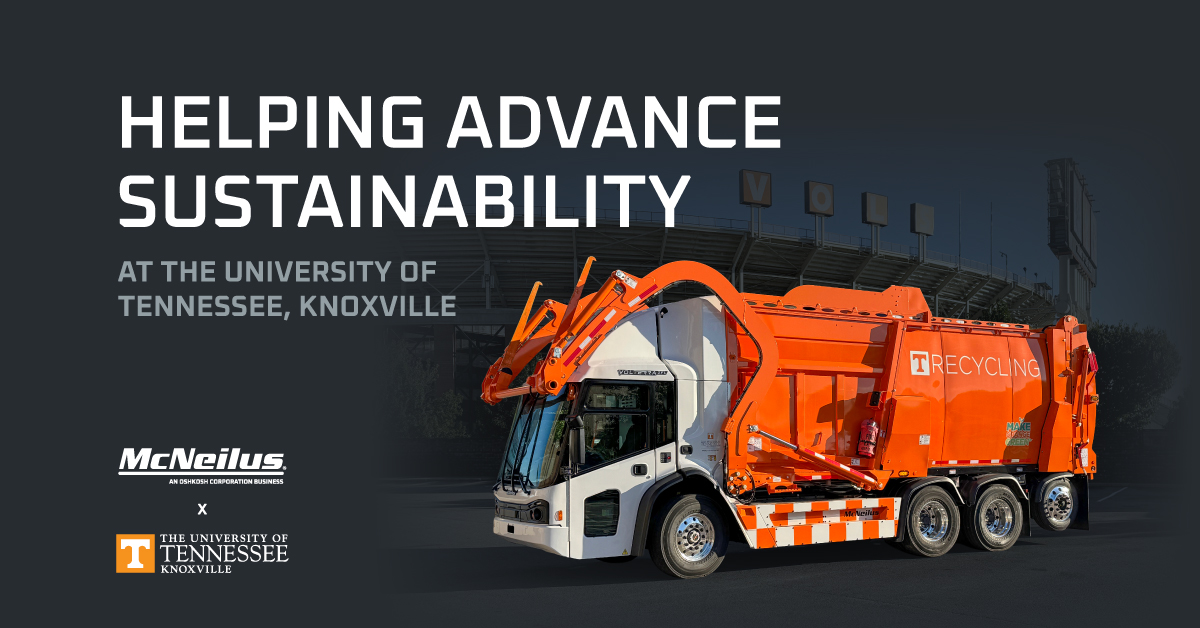
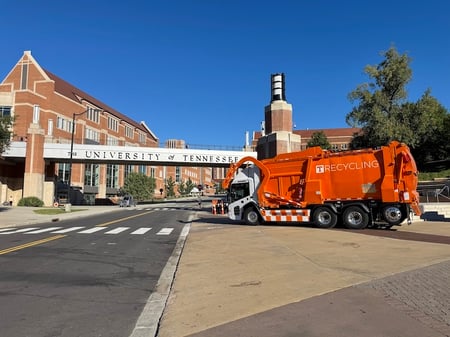
 Dodge Center, MN (October 13, 2026) – McNeilus Truck and Manufacturing, Inc., an Oshkosh Corporation (NYSE: OSK) business, today announced the delivery of a McNeilus® Volterra ZFL™ electric refuse and recycling collection vehicle to the University of Tennessee, Knoxville. The purpose-built electric vehicle will be integrated into UT Knoxville Facilities Services’ daily recycling collection operations, supporting the university’s broader fleet electrification and sustainability initiatives.
Manufactured at the company’s facility in Murfreesboro, Tennessee, the McNeilus Volterra electric refuse and recycling collection vehicle brings together advanced electric collection technology and Tennessee manufacturing in a vehicle that will operate on the state’s flagship university campus. The order was secured by McNeilus dealer, Siddons-Martin Environmental Group.
“The University of Tennessee is an ideal example of how purpose-built electric refuse and recycling collection vehicles can be integrated into demanding, real-world operations,” said Lee Dreas, president of McNeilus Truck and Manufacturing. “The McNeilus® Volterra™ electric refuse and recycling collection platform was engineered from the ground up to deliver the performance, reliability and operator experience customers expect from their collection vehicles while providing the benefits of an electric platform. We’re especially proud to see a vehicle built by our team in Tennessee put to work at the University of Tennessee, Knoxville.”
UT Knoxville selected the McNeilus Volterra eRCV after evaluating options for a purpose-built electric collection vehicle capable of performing the same demanding daily work as its conventional fleet. The ability to meet the project’s grant-funded procurement and delivery timeline, along with McNeilus’ extensive refuse and recycling industry experience, were important considerations in the university’s decision.
Campus recycling routes provide a unique environment for electric vehicle operation, with frequent stopping and starting, low operating speeds, tight service areas, elevation changes and significant pedestrian and vehicle traffic. The McNeilus Volterra’s electric platform provides the university with an opportunity to reduce tailpipe emissions and diesel fuel use while taking advantage of regenerative braking and quiet operation, particularly during early-morning collections near residence halls and academic buildings.
“There is something special about putting a truck built by hardworking Tennesseans to work at the University of Tennessee,” said Brad Moats, recycling supervisor at the University of Tennessee, Knoxville Facilities Services Department. “The McNeilus Volterra gives us an opportunity to support regional manufacturing while bringing advanced electric vehicle technology directly into our daily campus operations. We’re excited to put this truck to work, measure its performance under real-world conditions and use what we learn to help guide the future of our fleet.”
UT Knoxville’s McNeilus Volterra eRCV will perform regular campus recycling routes and Facilities Services plans to evaluate energy consumption, reliability, maintenance requirements, operator experience, route performance, operating costs and emissions reductions compared with conventional equipment. The data will help the university assess where additional fleet electrification may make operational and financial sense in the future.
Moats added, “The vehicle is part of a broader UT Knoxville Facilities Services fleet electrification initiative supported through Tennessee’s Volkswagen Diesel Settlement Environmental Mitigation Trust program, administered by the Tennessee Department of Environment and Conservation (TDEC). UT Knoxville’s Student Environmental Initiatives Fund also provided financial support toward the project, combining external grant funding with campus sustainability investment to help bring advanced electric vehicle technology into daily university operations.”
The addition of the McNeilus Volterra ZFL eRCV gives UT Knoxville a highly visible opportunity to evaluate heavy-duty electrification under real-world conditions while demonstrating how state environmental investment, university sustainability funding and Tennessee manufacturing can come together to advance cleaner fleet operations.
For more information about McNeilus electric refuse and recycling collection vehicles, visit www.mcneilusgarbagetrucks.com.